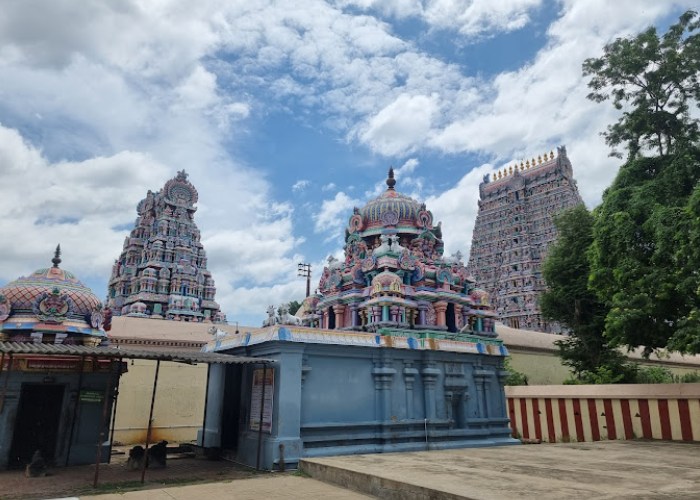



Sri Sarangapani Temple Kumbakonam
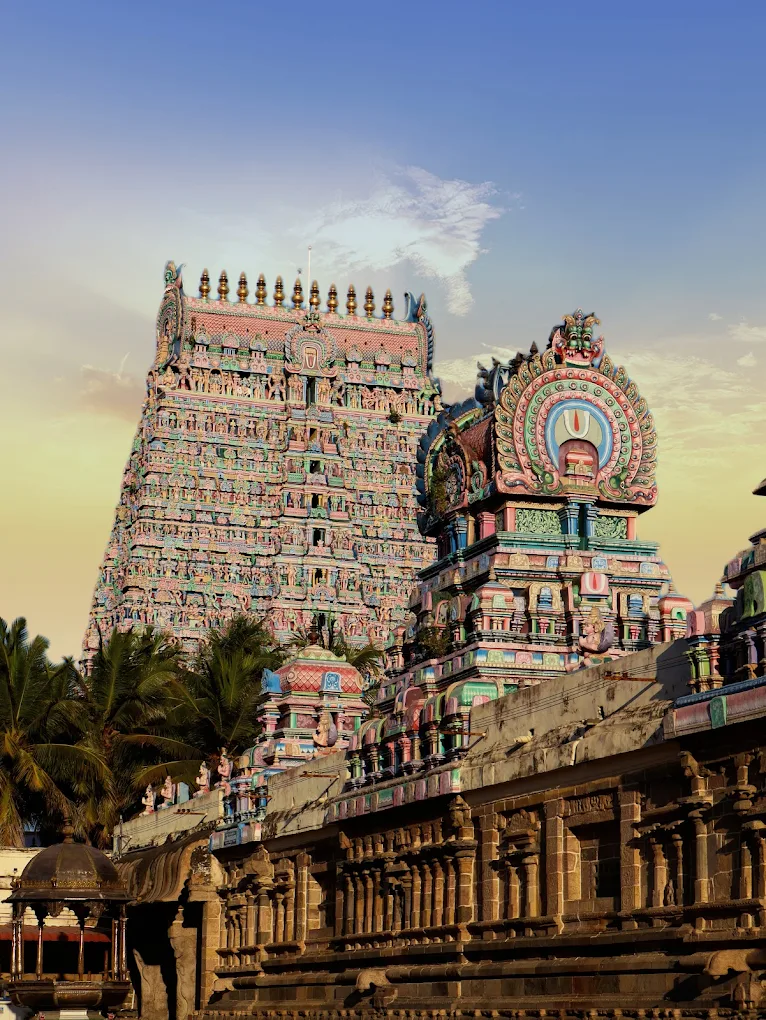
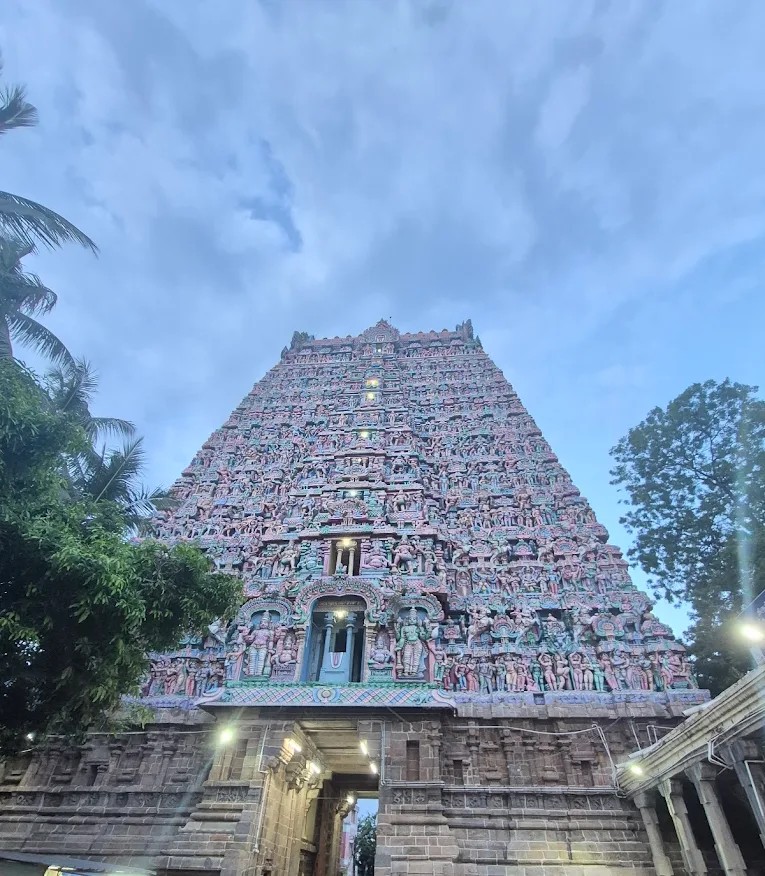
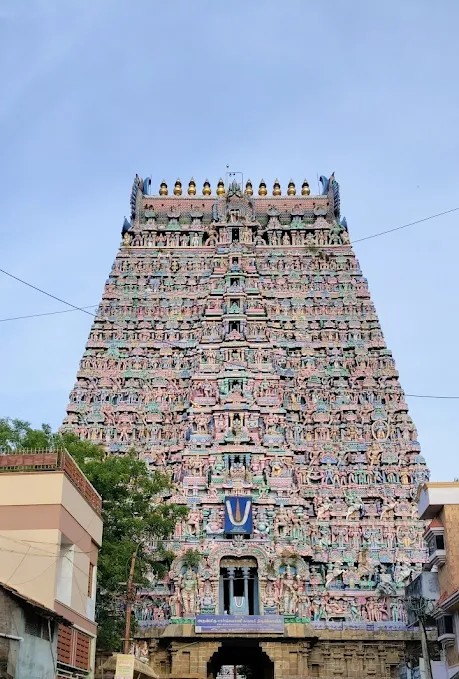

Temple Timings and Details

Darshan Timings
Morning Timing: 7:00 a.m. to 12:00 a.m
Evening Timing: 5:00 p.m. to 9:00 p.m

Aarti Timings
Morning Aarti – 08:30 AM
Afternoon Aarti – 12:30 PM
Evening Aarti – 07:30 PM


About Sri Sarangapani Temple Kumbakonam
The Lord Sanrangapani Temple is dedicated to Vishnu and is located in Kumbakonam, Tamil Nadu. It is one of the Divya Desams, the 108 temples of Vishnu considered in Nalayira Divya Prabandham by the 12 poet saints, or Alwars. The festival celebrated at this temple is Chittirai Brahmotsavam, the chariot festival. Vaikuntha Ekadashi and Vasantotsav.How to Reach Sri Sarangapani Swami TempleThe temple can be easily reached by taking various modes of transport. Some ways to reach the temple are as below.By RailThe nearest railway station is Kumbakonam Railway Station, at a distance of 1-2 km from the temple. There are facilities for public transport and private taxis to reach the temple from the station.By RoadThe temple is easily accessible by road. There are facilities for public transport and even one can take a private taxi to reach the temple. The temple can be reached by road comfortably.By AirThe nearest airport is Tiruchirappalli International Airport (TRZ), about 95 km away. The temple can be reached by taking public transport and private taxis from the airport. Best Time to Visit Sarangapani TempleThe best time to visit this temple is from October to March. In the winter months, one can easily explore the temple and do the sightseeing in the best possible way.
Accommodation Near Sri Sarangapani Temple Kumbakonam


Temple Location
Frequently Asked Questions(FAQ)
1. Who built the Sarangapani Temple?
This temple is along Kaveri and was built with the contributions of the Cholas, Nayaks, and Kings of the Vijaynagar Empire.
2. How tall is the Sarangapani chariot?
It is one of the tallest chariots, with a height of 173 feet, a length of 90 feet and a width of 51 feet.
3. What is the history of the Kumbakonam temple?
Kumbakonam Temple is the most ancient and was founded in the third century.